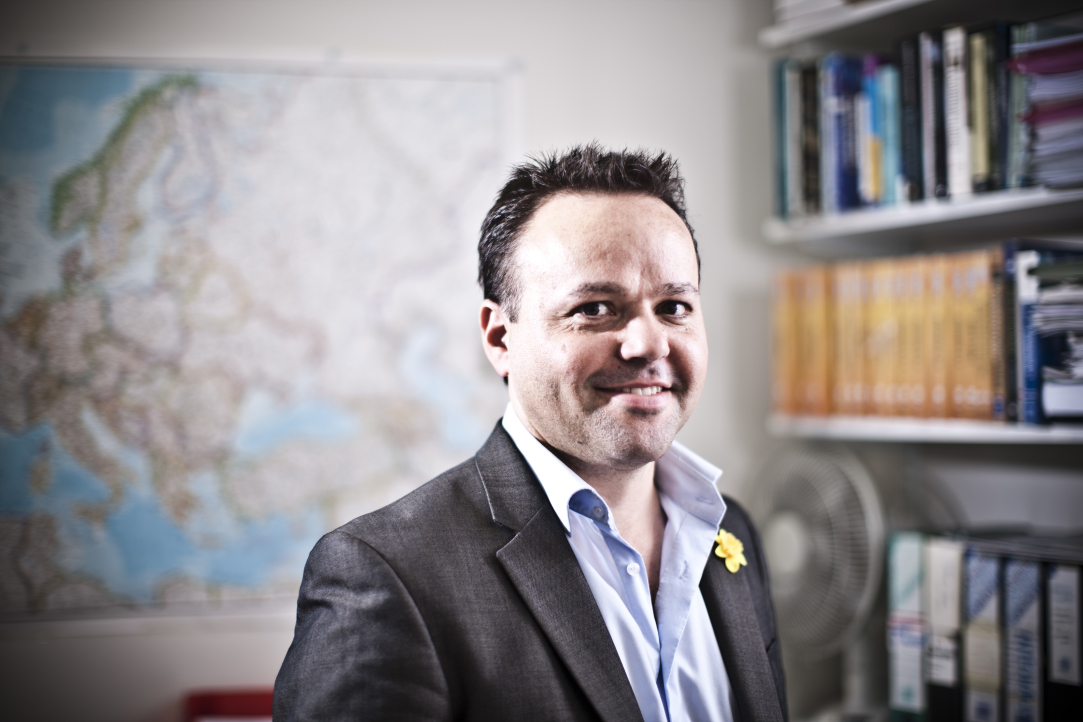
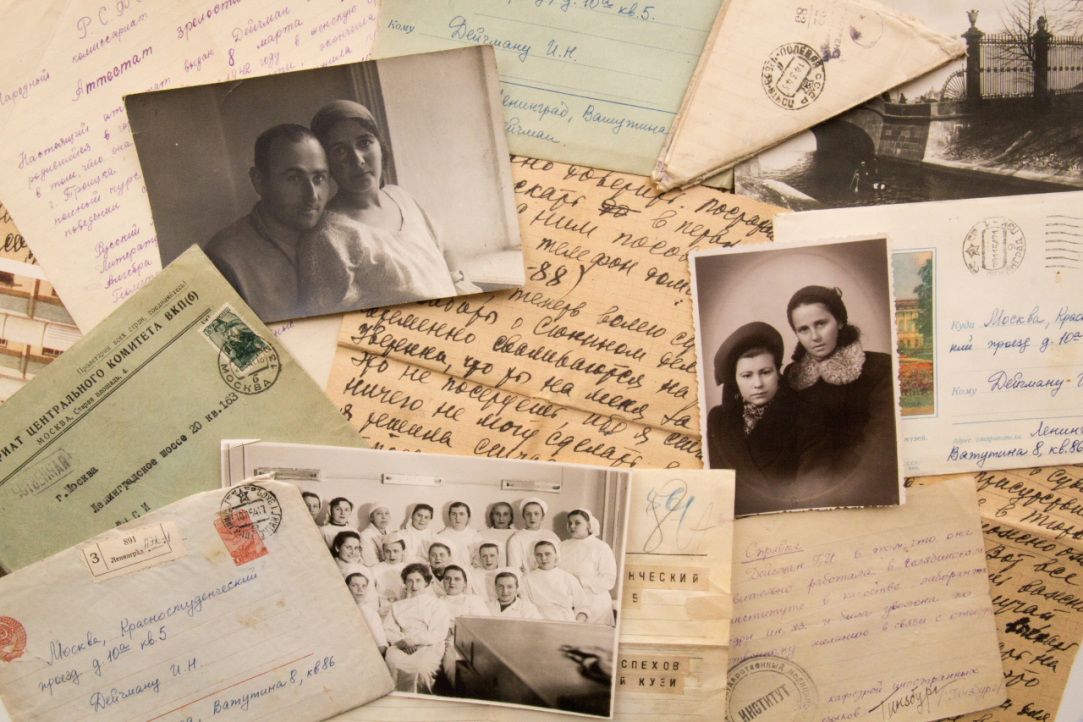
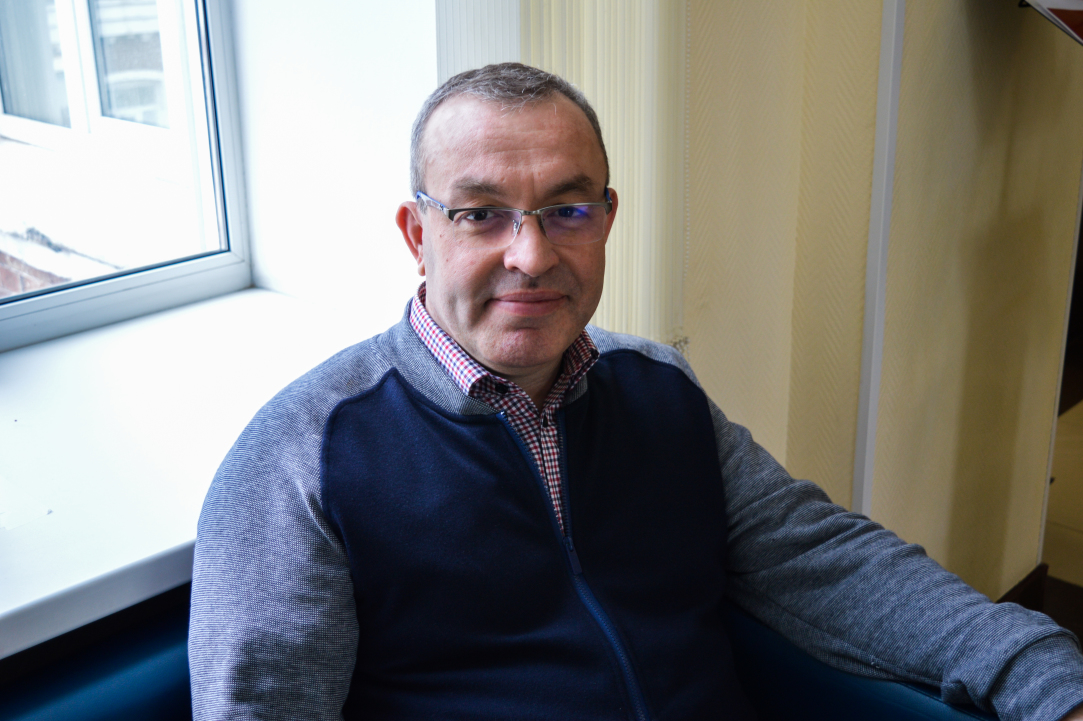
On November 1, Riccardo Cucciolla began a postdoctoral fellowship at the HSE International Centre for the History and Sociology of World War II and Its Consequences. During his year at HSE, he intends to pursue a research project that follows from his dissertation entitled ‘The Crisis of Soviet Power in Central Asia: The Uzbek Cotton Affair (1975–1991)’, which he wrote while completing a PhD in Political History at the IMT School for Advanced Studies Lucca in Lucca, Italy.
On October 19, the HSE School of Sociology hosted Dr. Kerstin Jacobsson, Professor of Sociology at the University of Gothenburg (Sweden), for a seminar entitled ‘Emotions and Morality in a neo-Durkheimian Perspective on Social Movements’. Held as part of the International Sociology Seminar Series, Dr. Jacobsson’s talk was based on the book Animal Rights Activism: A Moral-Sociological Perspective on Social Movements (co-authored with Jonas Lindblom), which develops a novel theoretical perspective on social movements. Following her lecture, she spoke with the HSE News Service about some of the key findings in her research on social movements, including as they relate to the post-Soviet space.
On October 10, Stephen Wheatcroft, Professor of the School of Historical Studies at the University of Melbourne delivered a lecture on ‘The importance of the grain problem in the Russian Revolution and for the next 40 years of Soviet Economics' at HSE Moscow as part of a long and busy schedule. A participant at previous April Conferences at HSE, Professor Wheatcroft is one of the world’s foremost experts on Soviet social, economic and demographic history, as well as famine and food supply problems in modern world history.
Centre for Health Economics, Management and Policy - or CHEMP, as it is known - was launched two years ago. Today CHEMP offers a unique opportunity to unite and internationalize the emerging body of education and research in the field of health studies. CHEMP’s Director Professor Christopher Gerry, Chair of Internationalisation Steering Group and Academic Adviser to Faculty of Social Sciences and Humanities at HSE St. Petersburg, provides an update on the Centre’s activities and achievements.
HSE’s Faculty of Law is a partner of the Fulbright Scholar Programme and each year has the opportunity to host a Distinguished Chair in Sustainable Development. David Wirth, a Professor who teaches and supervises research at Boston College Law School, arrived at HSE in this capacity in September 2016 and spent the past academic year in Moscow. He has talked to HSE News Service about his impressions.
The HSE Institute for Social Policy held an event entitled ‘Demographic Challenges of the 21st Century’ on 13 June 2017. At the event, Lauren Woodard, PhD candidate, Department of Anthropology, University of Massachusetts, presented her report ‘Politics of Return: Resettlement of Compatriots Programme in Primorsky Territory’. Here she talks to HSE News about the event, her research, and her interest in the complex issues of identity in Russia and the Former Soviet Union.
International Centre for the History and Sociology of World War II and Its Consequences, Higher School of Economics and The Friedrich Ebert Foundation held 'A Memory Revolution’: Soviet History Through the Lens of Personal Documents' in Moscow on 7-8 June, 2017. The conference brought together distinguished historians and sociologists from across the globe. Michael David-Fox, Professor of History, Georgetown University, and Academic Advisor of HSE International Center for the History and Sociology of World War II and Its Consequences shares his reflections and considerations on the main topic and discussions at the conference and his own research
How can financial managers help design products and services? What bearing may a CEO’s death have on investment decisions? Why is our perception of time and place changing? Professor Jean-Malik Dumas from Tilburg University discusses these and other issues in an interview with HSE News Service. He has recently visited HSE Faculty of Economic Sciences under Erasmus Plus programme to teach an elective course in Finance for Master’s students of Strategic Corporate Finance programme.
On May 31, Valerie Kivelson, Professor of History at the University of Michigan, will be delivering a seminar entitled ‘Visualizing Empire: Muscovite Images of Race’. Professor Kivelson is an expert in Medieval and early modern Russia, history of cartography, history of witchcraft, religion, and political culture, among other topics. She is the author of 'Desperate Magic: The Moral Economy of Witchcraft in Seventeenth Century Russia' and a guest editor of 'Witchcraft Casebook: Magic in Russia, Poland and Ukraine. 15-21st Centuries'.
On Tuesday, May 23, William Reisinger, Professor of Political Science at the University of Iowa, will deliver a seminar at the HSE School of Political Science entitled ‘The Impact of Petty Corruption on Political Support in Post-Soviet Societies’. Ahead of his seminar, Professor Reisinger spoke with the HSE News Service about the topic of his research, how his impressions of Russia and the post-Soviet world have changed since he began visiting the region, and the changing interest in Russia that he has observed among Western students over the past several decades.